Phosphodiesterase inhibitors: new HD drugs entering trials soon
CHDI and Pfizer announce exciting animal work and plans for a human trial with a drug targeting 'phosphodiesterases'.
At this year’s HD therapeuticstherapeutics treatments conference, Pfizer Pharmaceuticals and the CHDI Foundation announced big plans for new HD drugs that target something called ‘phosphodiesterases’. What’s so exciting about these new drugs, and what’s the timeline for bringing them to people?
Phospho-di-what?
Most people have probably heard of the drug Viagra. However, many would be surprised to discover that the “little blue pill” was originally developed as a treatment for high blood pressure, and only during clinical trials was it discovered to have some – ahem – unexpected side-effects.

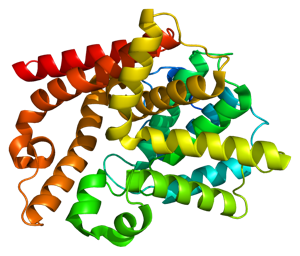
Viagra is just one of a series of drugs called phosphodiesterasePhosphodiesterase a protein that breaks down cyclic-AMP and cyclic-GMP inhibitors (pronounced foss-foe-die-EST-er-ayze), which have been used to treat a range of ailments such as heart disease and asthma. These drugs all work in similar ways, but have very different effects in the body. They are so variable, in fact, that select phosphodiesterasePhosphodiesterase a protein that breaks down cyclic-AMP and cyclic-GMP inhibitors are now being investigated for the treatment of HD.
To understand how phosphodiesterasePhosphodiesterase a protein that breaks down cyclic-AMP and cyclic-GMP inhibitors might benefit HD, we must first learn a little about phosphodiesterases themselves and how they are used by our brains.
Neuronsneuron Brain cells that store and transmit information need to connect
Our neuronsneuron Brain cells that store and transmit information make it possible for us to think and move by forming many connections with other surrounding neuronsneuron Brain cells that store and transmit information, which each have distinct roles in creating and delivering messages to our body. One neuronneuron Brain cells that store and transmit information can form many thousands of connections.
Messages are passed from one neuronneuron Brain cells that store and transmit information to another through chemical signals called neurotransmitters. Like a relay race, when one neuronneuron Brain cells that store and transmit information sends out a neurotransmitter to another neuronneuron Brain cells that store and transmit information, it sets off a series of events that activate the receiving neuronneuron Brain cells that store and transmit information, and prepare it to pass the message along.
Neurotransmitters are called ‘first messengers’ because they’re the first message to arrive, signaling that another neuronneuron Brain cells that store and transmit information has fired off a message. Inside neuronsneuron Brain cells that store and transmit information there are ‘second messengers’, including the chemicals cyclic AMP and cyclic GMP, which change the receiving neuronneuron Brain cells that store and transmit information’s behavior in response to the first message.
This process could be compared to a mailman attempting to deliver a letter. When he knocks on the door, it is answered by a child, so the mailman asks the child to pass the message along to his mother. In this example, the mailman is the neurotransmitter (or first messenger), who passes the message along from outside the house, and it is the child (or second messenger) who passes the message along to his mother from the inside.
The second messengers cyclic AMP and cyclic GMP are critical to brain function. One of the ways they work is by activating and turning off genes through their interaction with ‘transcriptiontranscription the first step in making a protein from the recipe stored in a gene. Transcription means making a working copy of the gene from RNA, a chemical messenger similar to DNA. factors’.
So, even though a burst of neurotransmitter is very brief, by changing the levels of cyclic AMP and cyclic GMP inside the cell, it can leave a lasting imprint on a neuronneuron Brain cells that store and transmit information by interacting with transcriptiontranscription the first step in making a protein from the recipe stored in a gene. Transcription means making a working copy of the gene from RNA, a chemical messenger similar to DNA. factors and turning genes on or off.
To grow and learn, neuronsneuron Brain cells that store and transmit information need to be shaped and moulded according to the messages they receive. Signaling by second messengers is very important for everyday learning and memory. Genes turned on by increased concentrations of second messengers cause connections with other neuronsneuron Brain cells that store and transmit information to be strengthened or lost. This flexibility in the strength of connections between neuronsneuron Brain cells that store and transmit information enables the formation of new memories and the learning of new tasks.
“CHDI and Pfizer have done an enormous amount of work in animals to prove that this drug does interesting things. They’ve also laid out a very responsible and quick pathway to clinical testing to see if the drug does what we all hope for – an effective treatment for HD”
Having the right levels of cyclic AMP and cyclic GMP is obviously very important. Neuronsneuron Brain cells that store and transmit information that are not able to properly receive and interpret signals will lose their connections, which can cause them to die.
What about phosphodiesterases in the brain?
And so finally, we reach the important task of phosphodiesterases. Phosphodiesterases deactivate cyclic AMP and cyclic GMP by breaking apart their chemical structure.
Because phosphodiesterases dampen second messenger signals, drugs that block phosphodiesterases –phosphodiesterasePhosphodiesterase a protein that breaks down cyclic-AMP and cyclic-GMP inhibitors – allow the buildup of more cyclic AMP and cyclic GMP, strengthening their message.
Normally, having phosphodiesterases active in our brains is a good thing – too much cyclic AMP and cyclic GMP message would lead to over-stimulation of neuronsneuron Brain cells that store and transmit information. And when it comes to chemicals in the brain, we must always maintain a fine balance.
The striatum, garbled messages and new hope
In HD mouse models, researchers have found that the levels of cyclic AMP in the striatum are lower than in normal mice. That may explain why this brain region is particularly sensitive to the effects of Huntington’s disease.
Although neurotransmitters may be sending the correct messages to vulnerable cells of an HD-affected brain, low levels of second messengers might mean those cells can’t interpret the information correctly.
A team of scientists at CHDI, led by Dr Vahri Beaumont, are very interested in measuring neuronal communication. Rather than waiting around for neuronsneuron Brain cells that store and transmit information to die, they reason, it’s better to design tests for changes in how neuronsneuron Brain cells that store and transmit information talk to one another.
Working with specialists in measuring the communications between neuronsneuron Brain cells that store and transmit information, Beaumont and her team have developed tests that accurately measure the communications between neuronsneuron Brain cells that store and transmit information. Having established these tests, they’ve shown that communication between neuronsneuron Brain cells that store and transmit information is distinctly altered in HD brains, especially in the striatum – the region of the brain most vulnerable in HD.

Their consistent finding is that vulnerable neuronsneuron Brain cells that store and transmit information in the striatum of HD mice are ‘restless’ and too excitable.
New human drug trial on the way
To try and combat this hyper-excitability, CHDI launched a collaboration with Pfizer, the international pharmaceutical giant. Pfizer has well developed drugs that work as phosphodiesterasePhosphodiesterase a protein that breaks down cyclic-AMP and cyclic-GMP inhibitors, including Viagra, so they have a lot of experience which could prove useful for solving this problem.
One of Pfizer’s phosphodiesterasePhosphodiesterase a protein that breaks down cyclic-AMP and cyclic-GMP inhibitor drugs, called TP-10, blocks a particular form of phosphodiesterasePhosphodiesterase a protein that breaks down cyclic-AMP and cyclic-GMP found at higher levels in parts of the brain that are vulnerable in HD.
When HD mice were treated with TP-10, the results were very encouraging. Not only did the researchers observe an overall benefit to the motor skills of the mice, but they also saw less neuronneuron Brain cells that store and transmit information loss in the striatum.
At the annual HD Therapeuticstherapeutics treatments Conference, Pfizer and CHDI announced their joint efforts to testing TP-10 and a related drug in people. They are currently finishing animal studies, and plan several pilot studies in people in 2012 and 2013.
These preliminary studies are important to ensure that the drugs get where we think they should, and that they do what they’re supposed to do when they get there. If all goes as planned, look for a 6 month human study in late 2013 designed to try and prove that these drugs work in HD patients.
This is a very exciting development. CHDI and Pfizer have done an enormous amount of work in animals to prove that this drug does interesting things. They’ve also laid out a short but sensible pathway to clinical testing, to see if the drug is what we all hope for – an effective treatment for HD.
Learn more
For more information about our disclosure policy see our FAQ…