Largest creatine clinical trial for Huntington's disease halted after 'futility' analysis
CREST-E, a trial of the supplement creatine, has been stopped after an early analysis found it couldn't show benefit

CREST-E, the largest clinical trialclinical trial Very carefully planned experiments designed to answer specific questions about how a drug affects human beings of the dietary supplement creatine, has been terminated early because an early analysis of the results to date showed there was no realistic chance it could show positive results. This provides compelling evidence that creatine doesn’t slow down progression in Huntington’s disease patients.
What is creatine, why are we testing it in HD?
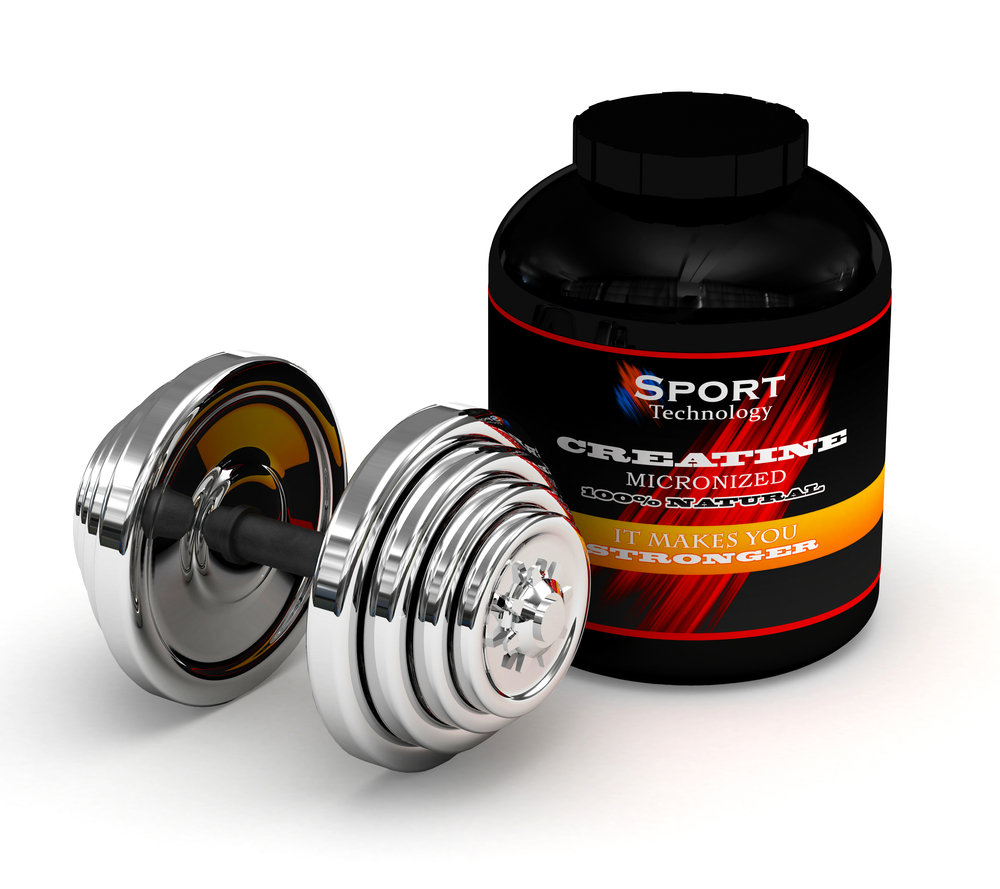
One of the many effects of the Huntington’s disease genetic mutation is that our cells become slightly less efficient at making and using energy. Creatine is a dietary supplement, widely used by bodybuilders, that can acts as a sort of bank to store extra high-energy chemical bonds cells need to make energy. Cells don’t actually burn creatine for energy but they use it as a place to store their extra energy for times of high demand.

Studies in HD animal models had suggested the potential for creatine to be beneficial in Huntington’s disease, but previous clinical trials in HD patients have been disappointing.
What is the CREST-E trial?
Coordinated by the Huntington Study Group, CREST-E aimed to build on previous trials of creatine, to provide definitive evidence either way about whether creatine slows progression in Huntington’s disease.
Not only was CREST-E the largest ever trial of creatine, enrolling 551 volunteers for three years each; it also employed the highest dose of creatine – up to 40 grams per day.
What does it mean to halt a trial for ‘futility’?
Many clinical trials are designed with so-called ‘interim analysis’ points. These enable the researchers to study the results to date, to see whether the therapy being studied is performing unexpectedly well or unexpectedly badly. This allows informed decisions to be made about whether the trial should be continued or abandoned.
A futility analysis is designed to ask, part-way through a trial, whether the chance of a positive outcome is so slim that there is little point continuing with the trial.
Unfortunately, the futility analysis for CREST-E showed just that. There was no real chance creatine could show clinical benefit, so the trial was stopped early.
Is this the end of the road for creatine?
“While disappointing, CREST-E provides very useful information to help guide decisions for HD family members and their clinicians. ”
While disappointing, CREST-E provides very useful information to help guide decisions for HD family members and their clinicians. CREST-E was well-designed and well run, but unfortunately showed quite convincingly that high-dose creatine doesn’t slow progression of Huntington’s disease.
Another study called PRECREST studied creatine in volunteers with the HD mutation but no symptoms. The results of PRECREST suggested some possible benefit for brain changes seen on MRImagnetic resonance A technique using powerful magnetic fields to produce detailed images of the brain in living humans and animals scans in HD. But the halting of CREST-E, which measured the real clinical effects of creatine, makes it hard to believe that the PRECREST findings would translate into delaying HD onset.
Now what?
While we’d love to be reporting the first successful clinical trialclinical trial Very carefully planned experiments designed to answer specific questions about how a drug affects human beings for slowing HD, it’s undoubtedly true that every trial will fail, until one doesn’t.
The important thing right now is to learn from ‘negative’ outcomes like this. Studies like CREST-E have helped us, as a community, to get really good at designing, enrolling and running clinical trials, and understanding why particular treatments don’t work. Now we have the result of CREST-E, all that energy, enthusiasm and experience can be directed into testing other experimental treatments with a higher chance of success. One very solid benefit is that hundreds of volunteers are now freed up to sign up for other clinical trials enrolling now or in the near future.
Thankfully, science never stops! Huntington’s disease researchers and drug-hunters across the globe have been hard at work studying the effects of the HD mutation and coming up with treatments designed with HD specifically in mind. This is in contrast to substances like creatine, which were thought to be beneficial for the brain in a much more general way.
As we recently reported from the European Huntington’s Disease Network meeting, no fewer than five new HD clinical trials are either underway already or enrolling soon. The biggest are Amaryllis, Legato-HD and Pride-HD, enrolling now or soon in North America and Europe. Your local HD clinic or Center of Excellence will have information on which trials you may be eligible for, and how to get involved.
For more information about our disclosure policy see our FAQ…