2025 HDBuzz Prize: When Good Huntingtin Goes Missing: A Step Toward Designing Safe HD Treatments
We’re proud to announce Gravity Guignard as a 2025 HDBuzz Prize winner! A new study points to one of the reasons why past HD trials might have failed. The good news? This shows the path to safer drugs, getting us closer to effective therapies.
A new study has shed light on the role of the regular huntingtin proteinhuntingtin protein The protein produced by the HD gene. in the brain. For years, researchers have known that the faulty expanded huntingtin proteinhuntingtin protein The protein produced by the HD gene. drives Huntington’s disease (HD), but this new study shows why the regular version matters for brain health. By lowering regular huntingtin (HTTHTT one abbreviation for the gene that causes Huntington’s disease. The same gene is also called HD and IT-15) in brain cells, scientists discovered hidden changes inside nerve cells that might help explain why some past HD drug trials may have run into trouble. Far from being discouraging, these findings give researchers a clearer roadmap for designing future therapies that are safer and more precise. Let’s take a closer look.
The Role of Huntingtin in Huntington’s Disease
HD is caused by a change in a single gene called HTTHTT one abbreviation for the gene that causes Huntington’s disease. The same gene is also called HD and IT-15. People with HD have a DNA “stutter,” a repeated stretch of the letters C-A-G, that is much longer than usual. Since everyone inherits two copies of each gene, one from their biological mom and one from their biological dad, people with HD typically carry one expanded HTTHTT one abbreviation for the gene that causes Huntington’s disease. The same gene is also called HD and IT-15 gene and one regular copy. This means that their cells produce two versions of the huntingtin proteinhuntingtin protein The protein produced by the HD gene.: a faulty, expanded form that drives the disease and a regular form that supports brain health.
The Promise and Challenge of Huntingtin-Lowering
Most of the treatments currently being tested for HD in clinical trials aim to lower huntingtin proteinhuntingtin protein The protein produced by the HD gene. (HTTHTT one abbreviation for the gene that causes Huntington’s disease. The same gene is also called HD and IT-15) levels. The goal is to reduce the toxic expanded huntingtin proteinhuntingtin protein The protein produced by the HD gene., but many of these approaches also reduce the regular version.
In recent years, potential HTTHTT one abbreviation for the gene that causes Huntington’s disease. The same gene is also called HD and IT-15-lowering therapies have faced challenges in clinical trials, with some not working as expected or raising safety concerns. There are many reasons why this may have happened, but one possible explanation is that reducing too much of the regular HTTHTT one abbreviation for the gene that causes Huntington’s disease. The same gene is also called HD and IT-15 protein could be harmful.

This has led scientists to ask an important question: what happens if too much regular HTTHTT one abbreviation for the gene that causes Huntington’s disease. The same gene is also called HD and IT-15 protein is lost? By understanding this, researchers can design safer trials and develop drugs that target the expanded form while sparing the healthy one.
In this new study, the researchers began to answer this by lowering expanded huntingtin in a type of brain cell, the nerve cell that transmits signals, and uncovered hidden changes that may explain why some past drug trials ran into trouble. Far from being discouraging, these findings offer a clearer roadmap for designing HD therapies that are safer and more precise.
Why Study the Hippocampushippocampus the seahorse-shaped part of the brain that's crucial for memory
Most research on regular HTTHTT one abbreviation for the gene that causes Huntington’s disease. The same gene is also called HD and IT-15 has looked at the developing brain, where regular HTTHTT one abbreviation for the gene that causes Huntington’s disease. The same gene is also called HD and IT-15 is essential, or at the striatum, the region that helps control movement and is most affected in HD. But most drugs circulate throughout the whole brain, not just one area. To better understand how lowering regular HTTHTT one abbreviation for the gene that causes Huntington’s disease. The same gene is also called HD and IT-15 affects overall brain health, scientists in this study turned to the hippocampushippocampus the seahorse-shaped part of the brain that's crucial for memory, a region of the brain that plays a central role in learning and memory.
How the Study Was Done
The researchers began by lowering regular HTTHTT one abbreviation for the gene that causes Huntington’s disease. The same gene is also called HD and IT-15 in nerve cells from a mouse hippocampushippocampus the seahorse-shaped part of the brain that's crucial for memory which were grown in a dish. To do this, they used a tool called siRNAsiRNA A way of silencing genes using specially designed molecules of RNA – like DNA but made of only a single strand – that target the message molecules in cells and tell them not to make a certain protein, which works like a genetic “off switch” by telling cells to stop making a chosen protein. This allowed them to reduce regular HTTHTT one abbreviation for the gene that causes Huntington’s disease. The same gene is also called HD and IT-15 in a precise and controlled way.

After treatment, the researchers used special markers to label different parts of the nerve cells and then looked at them with microscopes. These microscopes can zoom in so closely that scientists can see all the intricate details of the nerve cells, including the synapses where nerve cells connect and communicate, and chromatin, the DNA-and-protein bundles that package up all our genetic material and help control whether genes are switched on or off. The team tracked how the structure of nerve cells changed as regular HTTHTT one abbreviation for the gene that causes Huntington’s disease. The same gene is also called HD and IT-15 levels dropped.
The researchers also created a mouse model to replicate the experiment and confirm the results. This step is important because findings in simple systems, such as cells grown in a dish, do not always translate to the complexity of a whole brain and body. In these mice, regular HTTHTT one abbreviation for the gene that causes Huntington’s disease. The same gene is also called HD and IT-15 was specifically removed from the hippocampushippocampus the seahorse-shaped part of the brain that's crucial for memory using a harmless virus that delivered a molecular switch that tells certain genes to turn off. In this case, the switch was designed to shut down the gene that makes regular HTTHTT one abbreviation for the gene that causes Huntington’s disease. The same gene is also called HD and IT-15.
The Wiring Looks Pretty Normal
When the researchers looked at the wiring between nerve cells in these mice, they found that these structures remained mostly unchanged with less regular HTTHTT one abbreviation for the gene that causes Huntington’s disease. The same gene is also called HD and IT-15 around. That means reducing regular HTTHTT one abbreviation for the gene that causes Huntington’s disease. The same gene is also called HD and IT-15 levels did not immediately seem to disrupt how nerve cells connect to each other.
The Nucleusnucleus A part of the cell containing genes (DNA) Reveals the Answer
The big changes were hidden deeper inside the cell. When the researchers looked at the nucleusnucleus A part of the cell containing genes (DNA), the control center where DNA is stored, they saw clear effects. After regular HTTHTT one abbreviation for the gene that causes Huntington’s disease. The same gene is also called HD and IT-15 was reduced, the nuclei grew larger compared to the nuclei of untreated cells.
Even more importantly, DNA in these nerve cells became less tightly packaged, making it harder for the cell to manage which genes were active.
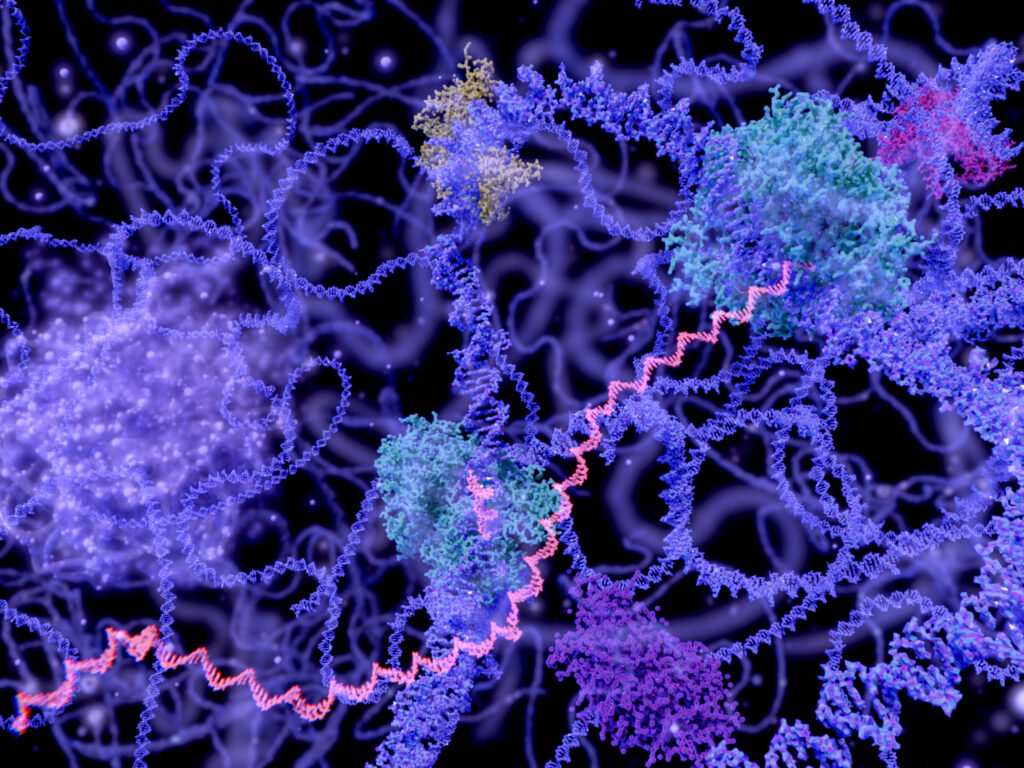
The researchers also looked at proteins and chemical tags that help control whether genes are switched on or off. When regular HTTHTT one abbreviation for the gene that causes Huntington’s disease. The same gene is also called HD and IT-15 was lowered, their levels shifted from their usual balance. Together, these changes suggested the nucleusnucleus A part of the cell containing genes (DNA) was less stable, even though the wiring of the nerve cells looked fine.
What This Means for the HD Community
At first, the idea that reducing regular huntingtin can affect the stability of nerve cells in the striatum might sound worrying. But in fact, these insights are good news for the HD community. For the first time, researchers know one of the possible reasons why some huntingtin-lowering drugs may have faced problems in earlier trials. Knowing this means the next generation of drugs can hopefully be designed to avoid those pitfalls. Instead of trial and error, scientists now have a roadmap showing what they should try to target and what to protect.
Importantly, this study lowered regular HTTHTT one abbreviation for the gene that causes Huntington’s disease. The same gene is also called HD and IT-15 by much more than what current drugs being tested are designed to do. In cells, levels dropped by about 86%. In comparison, clinical trials usually aim for a 30–50% reduction of regular HTTHTT one abbreviation for the gene that causes Huntington’s disease. The same gene is also called HD and IT-15. The changes seen in this study potentially reflect what happens when the amount of HTTHTT one abbreviation for the gene that causes Huntington’s disease. The same gene is also called HD and IT-15 is lowered too far, giving researchers a clearer sense of the safe range to target.
This research also shows that not all changes are obvious at the surface. While the wiring between nerve cells looked normal, the nucleusnucleus A part of the cell containing genes (DNA) revealed the hidden stresses that might come from lowering regular HTTHTT one abbreviation for the gene that causes Huntington’s disease. The same gene is also called HD and IT-15. That insight gives scientists a powerful tool to check whether new drugs are safe before they move to larger trials.
A Step Closer to Safe and Effective Therapies
For families, the message is hopeful: every study, even those that uncover challenges, helps sharpen the path towards effective treatments. By understanding how regular HTTHTT one abbreviation for the gene that causes Huntington’s disease. The same gene is also called HD and IT-15 supports brain health, researchers can better design drugs that lower the harmful expanded HTTHTT one abbreviation for the gene that causes Huntington’s disease. The same gene is also called HD and IT-15 while minimizing effects on regular HTTHTT one abbreviation for the gene that causes Huntington’s disease. The same gene is also called HD and IT-15.
Science is a step-by-step process. What we know today is built from the lessons of yesterday, and this study adds an important piece to the HD puzzle. With each discovery, the picture becomes clearer, and the future of safe and effective therapies comes into sharper focus.
Summary
- Huntington’s disease is caused by expanded huntingtin (HTTHTT one abbreviation for the gene that causes Huntington’s disease. The same gene is also called HD and IT-15), but regular HTTHTT one abbreviation for the gene that causes Huntington’s disease. The same gene is also called HD and IT-15 is essential.
- Reducing regular HTTHTT one abbreviation for the gene that causes Huntington’s disease. The same gene is also called HD and IT-15 in hippocampal nerve cells left synapses intact but disrupted the nucleusnucleus A part of the cell containing genes (DNA), with looser DNA and weaker gene “off switches.”
- These results help explain one of the possible reasons why some huntingtin-lowering drug trials didn’t work as we had hoped
- Most importantly, they show the path forward: new drugs should take into consideration how much of the expanded HTTHTT one abbreviation for the gene that causes Huntington’s disease. The same gene is also called HD and IT-15 and regular HTTHTT one abbreviation for the gene that causes Huntington’s disease. The same gene is also called HD and IT-15 are reduced and find a balance that supports healthy brain function.
Learn more
Meet this 2025 HDBuzz Writing Competition Winner

Gravity Guignard is in her final year of an Honours Bachelor of Science at Trinity College, University of Toronto, specializing in Fundamental Genetics. She conducts research in Dr. Derek van der Kooy’s laboratory, where she studies the development of neural stem cellsstem cells Cells that can divide into cells of different types.
This year, the HDBuzz Prize is brought to you by the Huntington’s Disease Foundation (HDF), who are sponsoring this year’s competition.
For more information about our disclosure policy see our FAQ…