Caution urged for the use of gene-editing technology CRISPR
A recent series of studies on the gene-editing method CRISPR have raised concerns about the suitability of this technology for the treatment of genetic illnesses such as Huntington's disease

A gene-editing tool known as CRISPRCRISPR A system for editing DNA in precise ways has been heralded as a breakthrough technology for scientists in the lab but also as a potential strategy to treat numerous genetic diseases, including Huntington’s. But a series of recent studies has suggested that CRISPRCRISPR A system for editing DNA in precise ways is less precise than previously thought, leading to unintended changes in the genomegenome the name given to all the genes that contain the complete instructions for making a person or other organism. Three independent studies which each sought to edit a single gene have shown that other parts of the DNA were also unexpectedly changed.
These studies are presented in an unfinalized online format and are still working their way through the scientific peer review process before formal publication. This means that there may still be errors in the science presented in the manuscripts which have yet to be spotted. However, as these independent and parallel studies all corroborate the finding that CRISPRCRISPR A system for editing DNA in precise ways technology can have off-target effects, there has already been mainstream and scientific media attention to these results. Although CRISPRCRISPR A system for editing DNA in precise ways still holds much promise as a research tool, it seems it is still a way off from being ready to be used as a medicine.
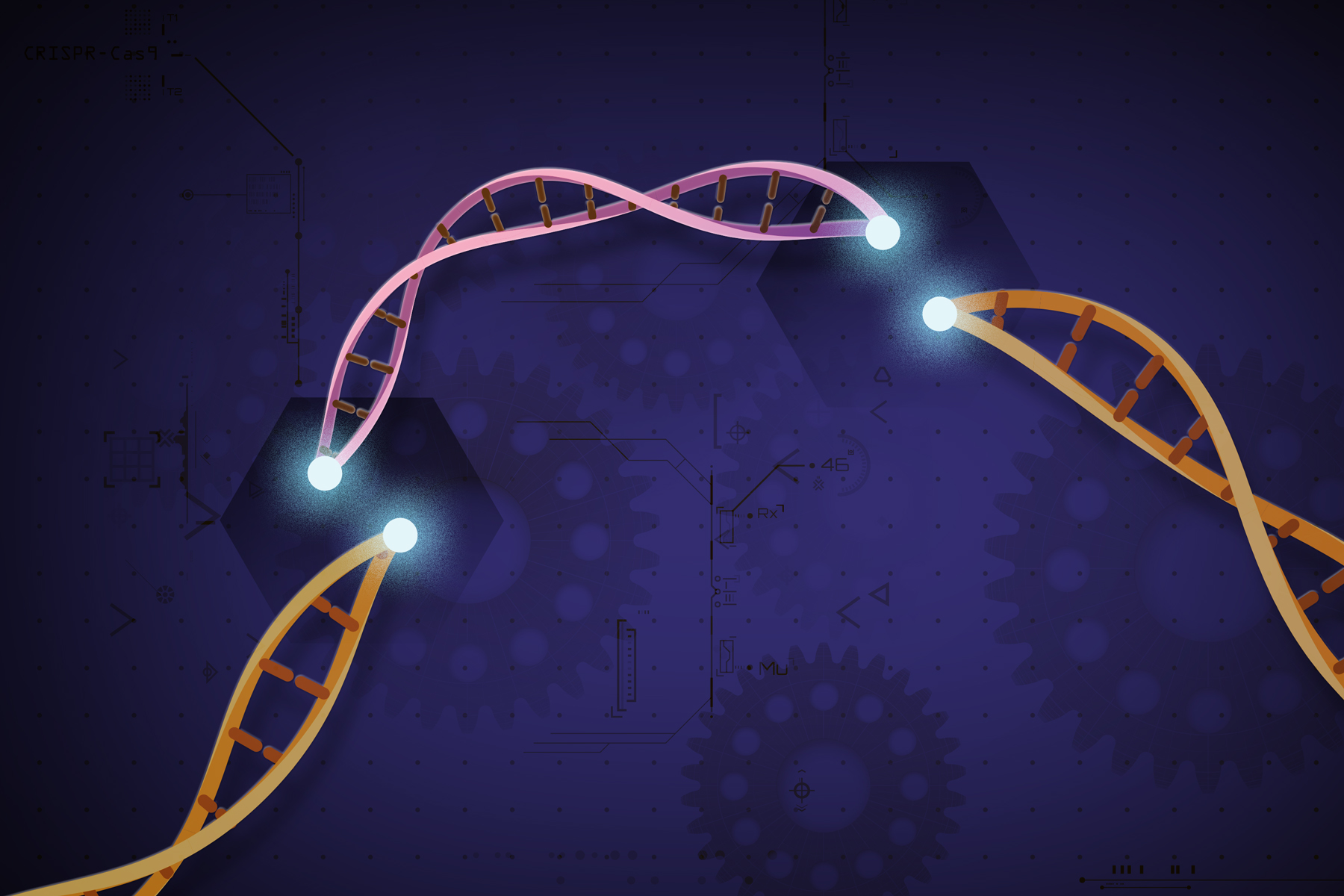
CRISPRCRISPR A system for editing DNA in precise ways can be used to make permanent changes to our DNA

Image credit: Quinn Dombrowski
The CRISPRCRISPR A system for editing DNA in precise ways system was first discovered as a type of immune system used by bacteria to defend themselves against viruses and other invaders by chopping up foreign genetic material. There are two components to the CRISPRCRISPR A system for editing DNA in precise ways machinery: A special piece of genetic message called a guide RNARNA the chemical, similar to DNA, that makes up the 'message' molecules that cells use as working copies of genes, when manufacturing proteins. that finds and points to the invader’s DNA, and an enzyme that can cut the DNA to destroy it. Check out this previous HDBuzz article for a detailed look at how CRISPRCRISPR A system for editing DNA in precise ways works and the challenges faced by the researchers exploring it.
Scientists can manipulate the system by changing the guide RNARNA the chemical, similar to DNA, that makes up the 'message' molecules that cells use as working copies of genes, when manufacturing proteins. to a target sequence and can therefore use the CRISPRCRISPR A system for editing DNA in precise ways system to make edits at precise parts of the genomegenome the name given to all the genes that contain the complete instructions for making a person or other organism. These edits are permanent changes to the genomegenome the name given to all the genes that contain the complete instructions for making a person or other organism and will be passed down from one generation to the next. Since its discovery in the late 2000s, scientists have been dreaming up all sorts of ideas and uses for CRISPRCRISPR A system for editing DNA in precise ways. For example, could it be possible to edit out the HD gene expansion in embryosembryo the earliest stage during the development of a baby, when it consists of just a few cells? These ideas are not without controversy given the ethical dilemmas surrounding genetic manipulation of humans or other species. CRISPRCRISPR A system for editing DNA in precise ways hit the headlines in 2018 when the CRISPRCRISPR A system for editing DNA in precise ways experiments of rogue scientist He Jiankui at the Southern University of Science and Technology in China resulted in the birth of twin girls who had their genomes edited.
A not so perfect system
“CRISPR gene editing could lead to very big and unintended changes to other parts of the genome”
The three recent studies were conducted by scientists at the Francis Crick Institute in London, Columbia University in New York City and Oregon Health & Science University in Portland. Each team of scientists used CRISPRCRISPR A system for editing DNA in precise ways to make different edits in human embryosembryo the earliest stage during the development of a baby, when it consists of just a few cells donated to research. The three experiments targeted genes involved in fetusfetus a developing baby in the womb development, blindness and heart problems. All of the studies found that CRISPRCRISPR A system for editing DNA in precise ways gene editing could lead to very big and unintended changes to other parts of the genomegenome the name given to all the genes that contain the complete instructions for making a person or other organism, including large deletions and rearrangements in regions close to the target gene. This is bad because our DNA code is a very precise set of instructions, which can be thought of like a cooking recipe. If you rearranged the steps in a recipe or got rid of some of the ingredients the outcome would not be good!
These off-target effects are due to problems in repairing the DNA, although there is not consensus amongst the studies as to how that might be happening. One thing all of the scientists do agree on though is that this should give everyone pause for thought when considering using CRISPRCRISPR A system for editing DNA in precise ways for genome editingGenome Editing The use of zinc-finger nucleases to make changes in DNA. 'Genome' is a word for all the DNA we each have. as the technology is not as fine-tuned as previously thought.
What does the future hold for CRISPRCRISPR A system for editing DNA in precise ways and HD?

Image credit: ZEISS Microscopy
The permanent nature of CRISPRCRISPR A system for editing DNA in precise ways-based therapies for genetic illnesses like HD is both attractive and daunting. In theory, CRISPRCRISPR A system for editing DNA in precise ways could be used to irreversibly cut out some of the CAG repeats in the expanded huntingtin gene within an embryoembryo the earliest stage during the development of a baby, when it consists of just a few cells. That way, the person who grows from that embryoembryo the earliest stage during the development of a baby, when it consists of just a few cells wouldn’t have HD and neither would their children. The permanent nature of edits made by CRISPRCRISPR A system for editing DNA in precise ways technology means that unintended consequences would not only affect the individual, but would also be passed from one generation to the next. Scientists are not keen to roll out the technology for these type of gene-therapies until they are absolutely certain that it is safe and working as planned.
The good news is that these recent discoveries have alerted scientists to the limitations of CRISPRCRISPR A system for editing DNA in precise ways technology. This will by no means stop scientists from dreaming big about how CRISPRCRISPR A system for editing DNA in precise ways could be useful in the future, but the community will move forward more cautiously. Scientists will now consider how best to improve the technology to avoid these types of problems and hopefully use CRISPRCRISPR A system for editing DNA in precise ways as a safe therapy for different genetic illnesses in the future.
Learn more
Sources & References
For more information about our disclosure policy see our FAQ…