
The Number on the Scale: What the TFC Score Measures, and Why It Matters Right Now
⏱️ 10 min read | The Total Functional Capacity score has been used in Huntington’s disease research for decades. Here’s what it measures, what it misses, & why it’s at the center of an anticipated clinical trial.

If you’ve been following HD clinical trialclinical trial Very carefully planned experiments designed to answer specific questions about how a drug affects human beings news, you may have encountered the phrase “TFCTotal Functional Capacity A standardized rating scale for function in HD, used to assess capacity to work, handle finances, perform domestic chores and self-care tasks score of 13.” It has come up recently in relation to the experimental huntingtin-lowering drug votoplam (formerly PTC-518), which is now being tested by a large pharmaceutical company called Novartis in the Phase 3 INVEST-HD study. The total functional capacityTotal Functional Capacity A standardized rating scale for function in HD, used to assess capacity to work, handle finances, perform domestic chores and self-care tasks (TFCTotal Functional Capacity A standardized rating scale for function in HD, used to assess capacity to work, handle finances, perform domestic chores and self-care tasks) scale is a well-established and widely used clinical tool in Huntington’s disease (HD) research. But what does TFCTotal Functional Capacity A standardized rating scale for function in HD, used to assess capacity to work, handle finances, perform domestic chores and self-care tasks score actually mean? And why does it matter so much for who gets to participate in this trial?
What is TFCTotal Functional Capacity A standardized rating scale for function in HD, used to assess capacity to work, handle finances, perform domestic chores and self-care tasks?
The Total Functional CapacityTotal Functional Capacity A standardized rating scale for function in HD, used to assess capacity to work, handle finances, perform domestic chores and self-care tasks scale, or TFCTotal Functional Capacity A standardized rating scale for function in HD, used to assess capacity to work, handle finances, perform domestic chores and self-care tasks, was developed in 1979 by researchers Dr. Stanley Fahn and the late Dr. Ira Shoulson, founder of the Huntington Study Group. They wanted to describe the specific functional needs of people living with HD. The idea was straightforward: rather than tracking individual symptoms in isolation, like choreachorea Involuntary, irregular ‘fidgety’ movements that are common in HD or cognitive changes, TFCTotal Functional Capacity A standardized rating scale for function in HD, used to assess capacity to work, handle finances, perform domestic chores and self-care tasks was designed to capture how well a person can manage the practical demands of daily life. It does this across five domains:
- Occupation: can you work, and at what capacity? (scored 0–3)
- Finances: can you manage your own money? (0–3)
- Household chores: can you manage tasks around the home? (0–2)
- Activities of daily living: can you perform basic self-care routines? (0–3)
- Care level: how much care do you need day-to-day? (0–2)
Add those up, and you get a total score ranging from 0 to 13. A score of 13 means that a person is fully functioning across all domains. A score of 0 means full-time skilled nursing care is required.
TFCTotal Functional Capacity A standardized rating scale for function in HD, used to assess capacity to work, handle finances, perform domestic chores and self-care tasks has been formally incorporated into the Unified Huntington’s Disease Rating Scale (UHDRSUHDRS A standardized neurological examination that aims to provide a uniform assessment of the clinical features of HD), which is the standard clinical assessment used in HD clinics worldwide, and TFCTotal Functional Capacity A standardized rating scale for function in HD, used to assess capacity to work, handle finances, perform domestic chores and self-care tasks remains one of the most widely used measures in HD clinical trials to this day.
TFC was designed to capture how well a person can manage the practical demands of daily life.
What does TFCTotal Functional Capacity A standardized rating scale for function in HD, used to assess capacity to work, handle finances, perform domestic chores and self-care tasks actually measure, and what doesn’t it?
The distinction between what TFCTotal Functional Capacity A standardized rating scale for function in HD, used to assess capacity to work, handle finances, perform domestic chores and self-care tasks measures and what it doesn’t matters, so it’s worth being precise: the TFCTotal Functional Capacity A standardized rating scale for function in HD, used to assess capacity to work, handle finances, perform domestic chores and self-care tasks score measures capacity, not activity. Losing a point on the occupation domain doesn’t necessarily mean the loss of a job; it means a person’s capacity to perform that job at their previous level has changed. A temporary illness, a career change, or early retirement wouldn’t move the TFCTotal Functional Capacity A standardized rating scale for function in HD, used to assess capacity to work, handle finances, perform domestic chores and self-care tasks score. The scale is trying to capture what HD is doing to functional abilities, not life circumstances.
This distinction also matters when interpreting scores over time. A large recent study using data from over 15,000 people in the Enroll-HD and Registry databases found that most people with HD maintain a maximum TFCTotal Functional Capacity A standardized rating scale for function in HD, used to assess capacity to work, handle finances, perform domestic chores and self-care tasks score of 13 for many years, consistent with the fact that HD progresses slowly and variably.
Of those who did experience a TFCTotal Functional Capacity A standardized rating scale for function in HD, used to assess capacity to work, handle finances, perform domestic chores and self-care tasks change, the most common first step was a drop from 13 to 12. That single-point drop, which occurred in 55% of those whose score changed, usually reflects a change in the occupation domain, the earliest to be affected in most people with HD. After occupation, changes in finance management and household chores tend to follow, then activities of daily living, and finally care level. This is a consistent sequence that holds across different CAG repeatCAG repeat The stretch of DNA at the beginning of the HD gene, which contains the sequence CAG repeated many times, and is abnormally long in people who will develop HD lengths.

Importantly, the same study found that about 18% of people who experienced a TFCTotal Functional Capacity A standardized rating scale for function in HD, used to assess capacity to work, handle finances, perform domestic chores and self-care tasks change actually showed an improvement in score at a subsequent visit. In a progressive neurodegenerativeneurodegenerative A disease caused by progressive malfunctioning and death of brain cells (neurons) disease, that might seem surprising. But it likely reflects the realities of how the scale is administered. There might be different clinicians assessing the same person, good days and bad days, or symptom management that improves someone’s capacity to function. It’s a useful reminder that a single TFCTotal Functional Capacity A standardized rating scale for function in HD, used to assess capacity to work, handle finances, perform domestic chores and self-care tasks data point is a snapshot, not a verdict.
Where TFCTotal Functional Capacity A standardized rating scale for function in HD, used to assess capacity to work, handle finances, perform domestic chores and self-care tasks fits in the HD-ISS
If you’ve read our previous coverage of the HD Integrated Staging System (HD-ISS), you’ll know that the field has been moving toward a more comprehensive framework for tracking HD progression, one that combines genetic confirmation, brain biomarkerbiomarker a test of any kind – including blood tests, thinking tests and brain scans – that can measure or predict the progression of a disease like HD. Biomarkers may make clinical trials of new drugs quicker and more reliable. changes, clinical signs, and functional status into a single four-stage system (stages 0–3). TFCTotal Functional Capacity A standardized rating scale for function in HD, used to assess capacity to work, handle finances, perform domestic chores and self-care tasks plays a specific and important role in that system.
In the HD-ISS, the transition from Stage 2 to Stage 3 is marked by the onset of functional decline. People in Stage 2 have tested positive for the HD gene, detectable brain changes, and clinical signs, but their day-to-day function is still intact. Stage 3 is where functional difficulties begin to emerge. That transition is precisely what TFCTotal Functional Capacity A standardized rating scale for function in HD, used to assess capacity to work, handle finances, perform domestic chores and self-care tasks is designed to detect: a score of 13 corresponds to no functional decline, while a drop to 12 or below signals that the Stage 3 threshold has been crossed.
This is also where one of the TFCTotal Functional Capacity A standardized rating scale for function in HD, used to assess capacity to work, handle finances, perform domestic chores and self-care tasks scale’s known limitations becomes relevant – it’s known as a “ceiling effect.” Because so many people with HD have a TFCTotal Functional Capacity A standardized rating scale for function in HD, used to assess capacity to work, handle finances, perform domestic chores and self-care tasks score of 13 and remain up there for an extended period, the scale isn’t sensitive to the earliest, subtlest changes in HD, like the kinds of changes that might be happening in HD-ISS Stage 1 or early Stage 2.
To overcome this, researchers have been developing complementary tools specifically designed to detect functional changes TFCTotal Functional Capacity A standardized rating scale for function in HD, used to assess capacity to work, handle finances, perform domestic chores and self-care tasks misses. Because TFCTotal Functional Capacity A standardized rating scale for function in HD, used to assess capacity to work, handle finances, perform domestic chores and self-care tasks is just one number that combines several aspects of daily function, and those changes may not all be equally important. For example, a two-point drop from 13 to 11 can reflect early occupational changes and a very different life experience than a two-point drop from 5 to 3, which could point toward the need for institutional care, even though the numerical change is identical.
A single TFC data point is a snapshot, not a verdict.
So why does this matter at this moment?
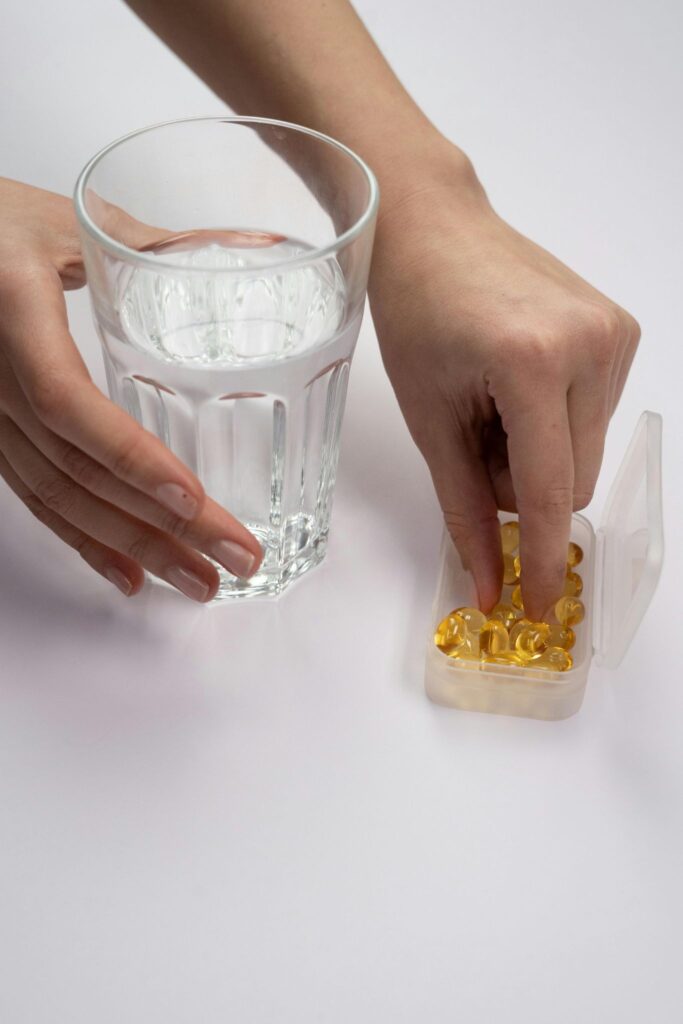
INVEST-HD is a Phase 3 trial of votoplam (previously PTC-518), a daily pill aimed at lowering huntingtin, that is now in progress through the efforts of Novartis. The study requires that participants have a TFCTotal Functional Capacity A standardized rating scale for function in HD, used to assess capacity to work, handle finances, perform domestic chores and self-care tasks score of exactly 13, along with an Independence Scale score of 90 or above, a Total Motor Score between 7 and 25, and a disease burden score (CAP100) of at least 70. Together, these criteria define a specific window: people who are genetically confirmed with HD, who have early motor symptoms, who carry meaningful disease burden based on their age and CAG length, but who are still fully functional across all five TFCTotal Functional Capacity A standardized rating scale for function in HD, used to assess capacity to work, handle finances, perform domestic chores and self-care tasks domains.
The reason this matters is because this is a notably different population than some enrolled in the Phase 2 PIVOT-HD trial testing the same drug. PIVOT-HD included two groups: an HD-ISS Stage 2 group (TFCTotal Functional Capacity A standardized rating scale for function in HD, used to assess capacity to work, handle finances, perform domestic chores and self-care tasks = 13, fully functional) and an HD-ISS mild Stage 3 group (TFCTotal Functional Capacity A standardized rating scale for function in HD, used to assess capacity to work, handle finances, perform domestic chores and self-care tasks = 11 or 12, or TFCTotal Functional Capacity A standardized rating scale for function in HD, used to assess capacity to work, handle finances, perform domestic chores and self-care tasks = 13 with reduced independence). In other words, the Phase 2 trial for votoplam deliberately studied people who had already experienced some functional decline. Phase 3 does not.
Learning from previous trials
The rationale for this narrowing is grounded in what the results of Phase 2 data showed. In our previous coverage of the PIVOT-HD results, we noted that the clinical signals in HD-ISS Stage 2 participants were more consistent and easier to interpret than those in Stage 3, and that more data could help guide inclusion criteria for future trials.
We also raised a question: “does votoplam have a different clinical effect based on disease stage? INVEST-HD’s TFCTotal Functional Capacity A standardized rating scale for function in HD, used to assess capacity to work, handle finances, perform domestic chores and self-care tasks = 13 requirement suggests that the answer is yes, at least in terms of which participants Novartis is prioritizing for this study of votoplam.
HD progresses gradually and variably, and TFCTotal Functional Capacity A standardized rating scale for function in HD, used to assess capacity to work, handle finances, perform domestic chores and self-care tasks scores can be sensitive to the circumstances of a single clinical visit. As we mentioned above, research shows that the most common first change in TFCTotal Functional Capacity A standardized rating scale for function in HD, used to assess capacity to work, handle finances, perform domestic chores and self-care tasks is a drop from 13 to 12. That single-point functional shift is enough to move someone outside the INVEST-HD eligibility window.
Understanding why these criteria are set where they are matters beyond just knowing whether someone may be eligible. Enrolling a more precisely defined group makes it easier to detect a treatment effect clearly and efficiently, which is ultimately the fastest path to getting a drug approved.
That said, we recognize this will be frustrating for many in the HD community who were hoping to participate but don’t meet the TFCTotal Functional Capacity A standardized rating scale for function in HD, used to assess capacity to work, handle finances, perform domestic chores and self-care tasks threshold. It’s important to remember that trial eligibility criteria are not the same as prescribing criteria. If votoplam is approved, who can access and benefit from the drug will be determined through a separate process, and that conversation is still ahead of us.
The TFCTotal Functional Capacity A standardized rating scale for function in HD, used to assess capacity to work, handle finances, perform domestic chores and self-care tasks goes to Phase 3
Despite its limitations, the TFCTotal Functional Capacity A standardized rating scale for function in HD, used to assess capacity to work, handle finances, perform domestic chores and self-care tasks scale has proven remarkably durable. It’s simple to administer, doesn’t require specialized equipment, and captures something clinically and personally meaningful: the ability to live one’s life. It’s an important distinguishing factor in assigning an HD-ISS stage, and the FDA continues to recognize it as an important outcome measure.
INVEST-HD will use TFCTotal Functional Capacity A standardized rating scale for function in HD, used to assess capacity to work, handle finances, perform domestic chores and self-care tasks as an endpointendpoint A specific outcome or measurement that researchers use to assess the effectiveness or safety of a treatment. Endpoints are predefined before the trial begins and can be either primary (the main result the trial is designed to evaluate, such as improvement in symptoms) or secondary (additional outcomes of interest, such as quality of life or biomarker changes)., meaning that changes in TFCTotal Functional Capacity A standardized rating scale for function in HD, used to assess capacity to work, handle finances, perform domestic chores and self-care tasks score over the trial period will be a key measure of whether votoplam is slowing HD progression in a way that matters to peoples’ lives.
If you want to learn more about the inclusion and exclusion criteria for the Phase 2 PIVOT-HD trial or the Phase 3 INVEST-HD trial, you can find full details at clinicaltrials.gov. Study sites for INVEST-HD are actively being added across more than 30 countries, so check back frequently. If you think you or a family member might be eligible, reach out to your neurologist or HD specialist to discuss further.
Summary
- Total Functional CapacityTotal Functional Capacity A standardized rating scale for function in HD, used to assess capacity to work, handle finances, perform domestic chores and self-care tasks (TFCTotal Functional Capacity A standardized rating scale for function in HD, used to assess capacity to work, handle finances, perform domestic chores and self-care tasks) is a score from 0–13 that measures how well someone with HD can manage daily life
- 13 = fully functional; 0 = full-time nursing care
- It measures what HD is doing to a person’s abilities, not job status or life circumstances
- Most people stay at 13 for a long time and the most common first drop is 13 to 12
- A score can sometimes improve between visits, so one number is never the whole story
- TFCTotal Functional Capacity A standardized rating scale for function in HD, used to assess capacity to work, handle finances, perform domestic chores and self-care tasks = 13 indicates HD-ISS Stage 2 and dropping to 12 or below means a cross into Stage 3
- The TFCTotal Functional Capacity A standardized rating scale for function in HD, used to assess capacity to work, handle finances, perform domestic chores and self-care tasks misses very early HD changes, so it’s not sensitive enough to measure the earliest stages
- The Phase 3 votoplam trial (INVEST-HD) requires TFCTotal Functional Capacity A standardized rating scale for function in HD, used to assess capacity to work, handle finances, perform domestic chores and self-care tasks = 13 to enroll
- The Phase 2 trial also enrolled people with TFCTotal Functional Capacity A standardized rating scale for function in HD, used to assess capacity to work, handle finances, perform domestic chores and self-care tasks of 11 or 12, but the Phase 3 does not
- A single one-point drop is enough to be ineligible for INVEST-HD
- Full details can be found at clinicaltrials.gov including new trial sites that are being added; talk to your neurologist if you’re interested
This article was edited on May 4th to say that TFCTotal Functional Capacity A standardized rating scale for function in HD, used to assess capacity to work, handle finances, perform domestic chores and self-care tasks itself is not a primary endpointprimary endpoint The main question asked in a clinical trial, but an endpointendpoint A specific outcome or measurement that researchers use to assess the effectiveness or safety of a treatment. Endpoints are predefined before the trial begins and can be either primary (the main result the trial is designed to evaluate, such as improvement in symptoms) or secondary (additional outcomes of interest, such as quality of life or biomarker changes). in general; it is also part of the eligibility criteria for the ongoing trial.
Sources & References
For more information about our disclosure policy see our FAQ…